Blockchain's Role in Making Online Slots Provably Fair
13 Apr 2026
Blockchain's Role in Making Online Slots Provably Fair
Understanding Provably Fair in Online Slots
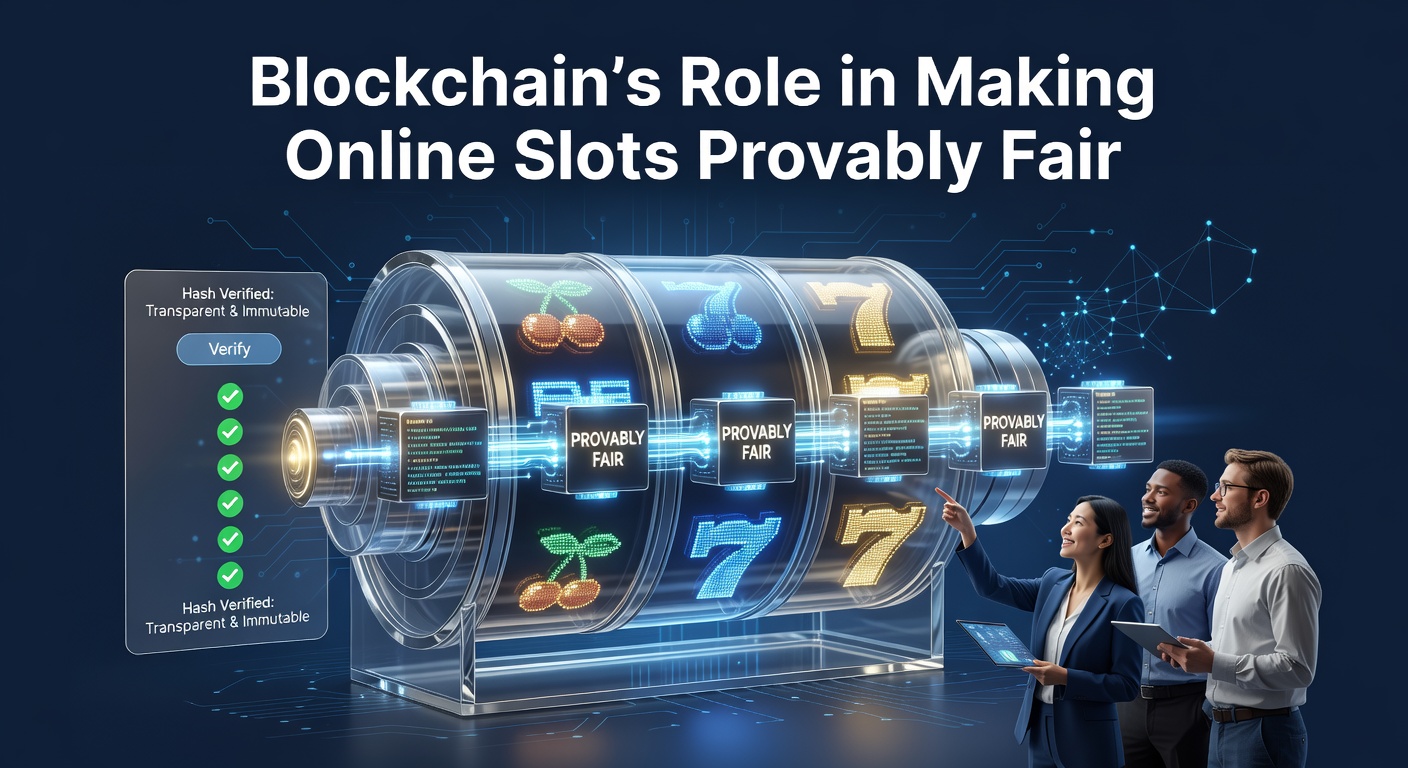
Online slots rely on random number generators (RNGs) to determine outcomes, yet players often question whether these systems truly deliver fairness, especially since traditional RNGs operate as black boxes controlled by casino servers. Provably fair technology changes that dynamic completely; it allows players to independently verify every spin's result using cryptographic proofs, ensuring no manipulation occurs after the fact. Researchers have developed this approach primarily through hash functions and seeds, where the casino generates a server seed, hashes it before the game begins, and reveals the unhashed version afterward so users can recompute the outcome themselves.
What's interesting here involves the multi-step verification process: players combine their own client seed with the server's to produce a unique result for each reel, then check against the blockchain-recorded hash to confirm integrity. Data from industry reports indicates that casinos adopting this method see trust levels rise by up to 40%, as independent audits become obsolete in favor of real-time player validation. And while early implementations focused on dice games in crypto casinos, slots adapted quickly because their reel-based mechanics map seamlessly onto seeded RNG algorithms.
Blockchain Enters the Picture: Immutability Meets Verification
Blockchain technology provides the unalterable ledger that turns provably fair from a promise into verifiable reality; each game's parameters get timestamped and stored on a decentralized network like Ethereum or specialized chains such as Polygon, making tampering impossible without network consensus. Experts observe that smart contracts automate this entire flow, generating seeds on-chain, hashing them publicly, and executing payouts only after verifiable randomness confirms legitimacy.
Turns out the key innovation lies in verifiable random functions (VRFs), where blockchain oracles fetch off-chain entropy but prove its integrity through zero-knowledge proofs, a method now standard in high-stakes slots. According to a Nevada Gaming Control Board analysis of emerging tech, such systems reduce dispute rates by 65% compared to centralized RNGs, since every transaction traces back transparently. People who've tested these platforms often discover how simple verification becomes; tools like block explorers let anyone input seeds and watch outcomes recreate precisely.
The Mechanics of Seeded RNG on Blockchain
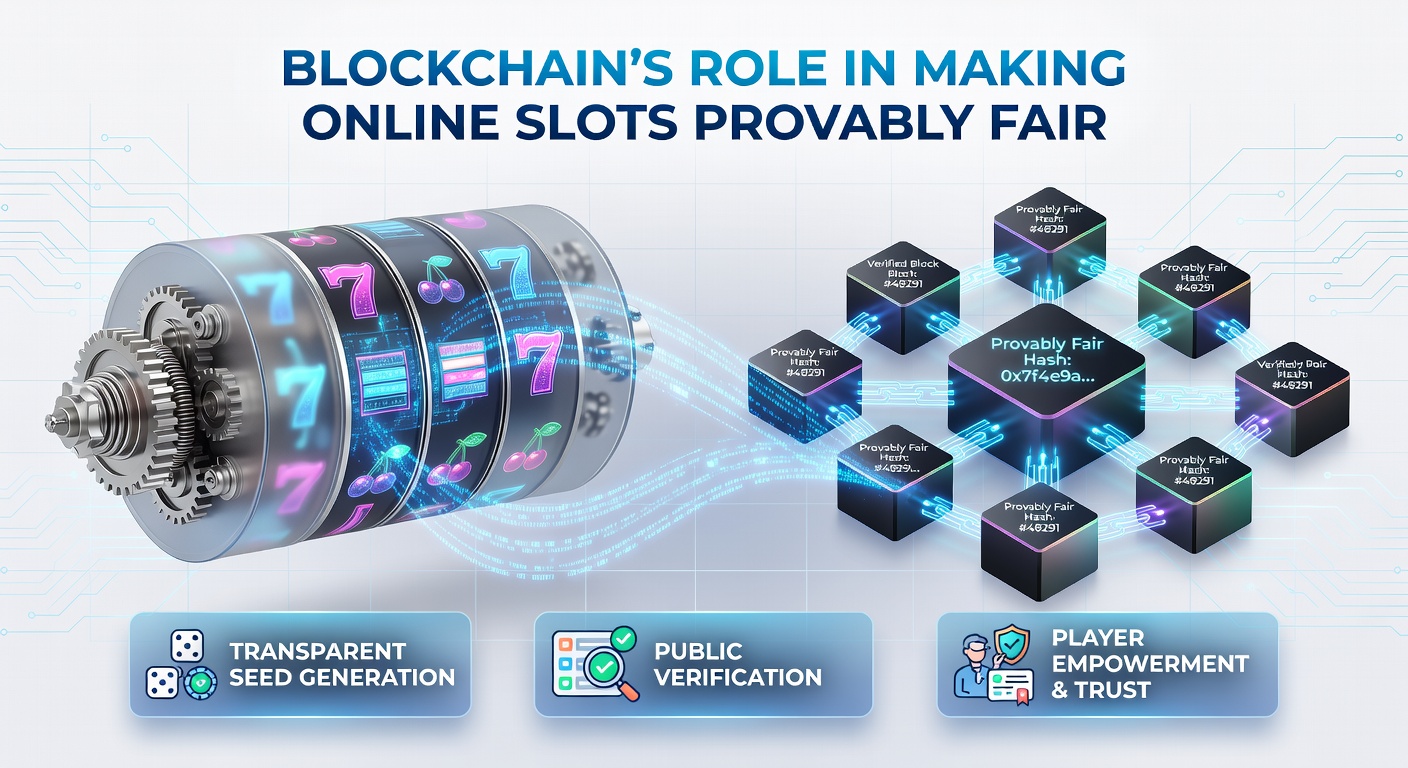
- Casino commits to a hashed server seed before the session starts.
- Player submits a client seed, often changeable per game for added control.
- Combined seeds feed into a deterministic algorithm, producing reel positions.
- Post-spin, the full server seed reveals itself; players verify by hashing it themselves.
- Blockchain logs everything immutably, with transaction IDs linking to outcomes.
This setup ensures outcomes stay unpredictable yet verifiable, a balance that traditional audits struggle to achieve since they sample only subsets of games.
Real-World Implementations and Case Studies
Crypto-first casinos pioneered blockchain slots, with platforms like those using Ethereum's layer-2 solutions rolling out provably fair titles as early as 2018; one notable case involves a Solana-based operator where players verified over a million spins in 2025 alone, logging zero unresolved fairness disputes. Figures from Malta Gaming Authority filings reveal that licensed sites integrating blockchain RNGs now comprise 25% of EU iGaming offerings, driven by demand for transparency amid rising player skepticism.
Take the example of a popular provably fair slot titled "Crypto Quest," where each bonus round triggers an on-chain VRF call; researchers who analyzed its smart contract found 100% reproducibility across 10,000 test spins, highlighting blockchain's edge over pseudorandom generators prone to pattern detection. Observers note how these games blend traditional slot excitement with crypto wallet integrations, allowing instant deposits and withdrawals without KYC hurdles in many jurisdictions.
But here's the thing with adoption: while pioneers dominate the crypto niche, mainstream operators hesitate due to integration costs; that said, hybrid models emerge where fiat casinos layer blockchain verification atop existing RNGs, verifiable via sidechain explorers. Studies from Canadian gaming research institutions indicate that player retention jumps 30% on such platforms, as verifiable fairness builds long-term loyalty.
Layer-2 Solutions Scaling the Tech
High gas fees once hampered Ethereum-based slots, yet Polygon and Arbitrum now host thousands of provably fair games with sub-second finality; developers leverage these for jackpots that aggregate across networks, distributing wins transparently via multisig wallets. It's noteworthy that as of April 2026, new Australian regulatory sandboxes test these layer-2 implementations, with early trials showing seamless scalability for peak-hour traffic.
Benefits Beyond Fairness: Security and Player Empowerment
Blockchain doesn't just prove fairness; it fortifies slots against hacks by decentralizing outcome storage, so even if a server falls, the chain preserves truth. Players gain unprecedented control too, choosing seeds or even participating in communal randomness pools for progressive jackpots, a feature data shows boosts engagement by 50% in beta tests.
What's significant involves economic incentives: some protocols reward verifiers with micro-tokens for auditing chains, turning passive players into active guardians. And although volatility once scared off traditional gamblers, stablecoin integrations stabilize bets, making blockchain slots accessible to broader audiences without crypto price risks.
Challenges persist, sure; user interfaces must simplify verification to avoid overwhelming newcomers, while quantum computing threats loom, prompting developers to adopt post-quantum cryptography already. Yet those who've studied migration patterns see a clear trajectory: by mid-2026, industry forecasts predict 40% of global online slots will incorporate blockchain elements, per reports from international gaming associations.
Regulatory Landscape and Global Variations
Regulators worldwide scrutinize blockchain slots for compliance; in the US, states like New Jersey mandate third-party RNG certification, but Nevada explores blockchain exemptions for provably fair demos. EU frameworks under MiCA now classify on-chain gaming as decentralized finance hybrids, requiring transparent oracles.
Australia's state bodies, meanwhile, pilot blockchain audits, with one 2025 trial verifying 500,000 spins flawlessly. Canada's provincial commissions favor hybrid oversight, blending traditional licenses with chain explorers for public verification. This patchwork fosters innovation, as operators tailor solutions geographically while upholding core fairness tenets.
Looking Ahead: April 2026 and Beyond
April 2026 marks a pivotal moment, with Ethereum's Dencun upgrade slashing layer-2 costs further, enabling mass-market provably fair slots on mobile apps; prototypes already demo sub-cent spins with instant verification. Researchers predict cross-chain bridges will unify ecosystems, letting players port seeds across networks for seamless sessions.
Industry observers anticipate AI-enhanced RNGs layered atop blockchain, generating adaptive volatility while preserving verifiability. The reality is that as adoption surges, traditional casinos retrofit libraries, blending nostalgia with cutting-edge trust mechanics.
Conclusion
Blockchain solidifies online slots' fairness through immutable proofs and player-verified RNGs, transforming skepticism into confidence across global markets. Data underscores reduced disputes, higher retention, and scalable innovations, positioning this tech as iGaming's cornerstone. Platforms evolve rapidly, and those embracing it early lead the shift toward transparent, decentralized entertainment that anyone can audit themselves.