12 Jun 2026
Examining Data Flow Efficiencies in Integrated Casino Ecosystems for Enhanced User Experiences on Mobile Devices
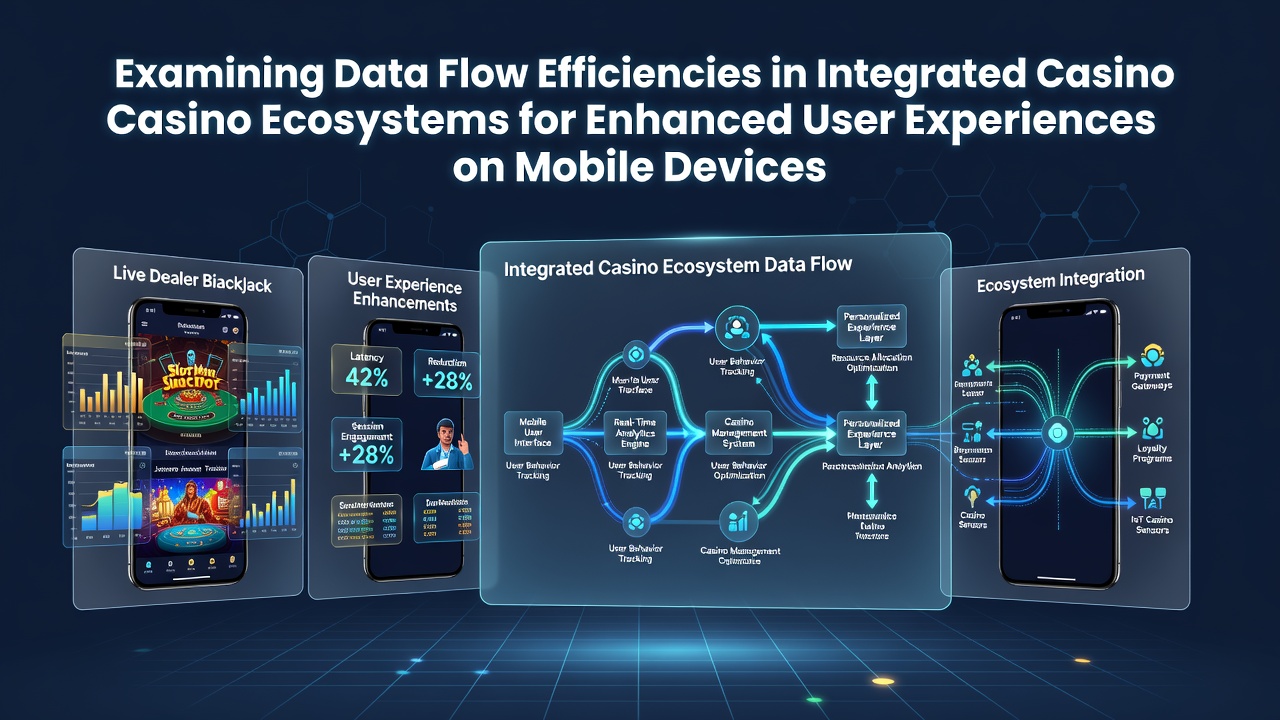
Integrated casino ecosystems combine gaming platforms, payment processors, player tracking systems, and regulatory compliance tools into unified networks that support seamless operations across desktop and mobile channels, while data flow efficiencies determine how quickly information moves between user devices and central servers to reduce latency during live sessions.
Operators achieve these efficiencies through optimized APIs, edge computing nodes positioned near user locations, and streamlined database queries that prioritize essential game state updates over non-critical analytics packets, and research from industry reports shows that such configurations cut average response times by measurable margins in high-volume environments.
Core Components of Data Movement in Casino Networks
Mobile devices initiate data exchanges when players launch applications or access browser-based platforms, sending authentication tokens, bet requests, and session metadata through encrypted channels to backend clusters, where integrated systems validate balances against real-time ledgers before returning outcome results within milliseconds, and this cycle repeats continuously during extended play periods.
According to data compiled by the American Gaming Association, synchronized ecosystems handle millions of concurrent transactions daily by routing traffic through load-balanced gateways that distribute workloads across multiple availability zones, which prevents bottlenecks when mobile traffic spikes during evening peak hours or promotional events.
Techniques for Reducing Latency and Improving Throughput
Developers implement caching layers that store frequently accessed game assets locally on devices while pulling dynamic elements like jackpot totals and player-specific bonuses from centralized sources only when changes occur, and compression algorithms shrink payload sizes for faster transmission over variable cellular and Wi-Fi connections without compromising data integrity.
Those who manage these systems note that protocol upgrades to HTTP/3 and QUIC connections allow parallel data streams that resume interrupted transfers more effectively than older standards, especially when users switch between networks while traveling or during unstable signal conditions common in public venues.
Impact on Mobile User Interactions and Session Continuity

Players experience fewer interruptions when data pipelines prioritize gameplay packets ahead of marketing overlays or loyalty point calculations, which keeps reel spins and table actions responsive even under heavy server loads, and figures from operational logs indicate that optimized flows maintain frame rates above target thresholds more consistently across diverse device hardware profiles.
June 2026 brought expanded testing of 5G standalone networks in several gaming jurisdictions, enabling operators to leverage higher bandwidth allocations for richer visual feeds and multi-camera live dealer streams that integrate directly with existing account management databases, and this development aligns with ongoing refinements in how ecosystems route supplemental data like chat logs and progressive meter updates.
Security Integration Within Efficient Data Pathways
Encryption standards such as TLS 1.3 combine with tokenization methods to secure each transmission leg from device to cloud instance, yet these protective measures integrate into the flow architecture without adding substantial overhead when hardware acceleration handles cryptographic operations at the chipset level, and observers note that compliance frameworks from bodies like the Nevada Gaming Control Board require documented audit trails that systems generate automatically during routine data exchanges.
Monitoring tools track packet loss rates and jitter metrics in real time, triggering automatic rerouting through alternate pathways when thresholds indicate emerging congestion, which maintains service levels for users regardless of geographic distribution or time-of-day demand patterns.
Analytical Feedback Loops Derived From Operational Data
Integrated platforms collect anonymized usage statistics that feed into machine learning models designed to predict peak usage windows and pre-position content closer to regional edge servers, and a study referenced by Gambling Research Australia highlighted how such predictive adjustments reduced average data transit distances in tested deployments across multiple continents.
These loops also inform capacity planning for upcoming regulatory changes that may require additional reporting fields, allowing adjustments to database schemas and query optimizations well in advance of implementation deadlines.
Conclusion
Integrated casino ecosystems continue to refine data flow processes to support expanding mobile adoption, with techniques centered on caching, protocol improvements, and intelligent routing delivering measurable gains in responsiveness and reliability, while regulatory environments evolve alongside technological capabilities to ensure secure and compliant operations through June 2026 and beyond.