Exploring Interconnections Among Transaction Systems, Interactive Game Formats, and Protection Measures in Smartphone-Based Casino Applications
Written by Rosa Butler · Jul 24, 2026
Exploring Interconnections Among Transaction Systems, Interactive Game Formats, and Protection Measures in Smartphone-Based Casino Applications
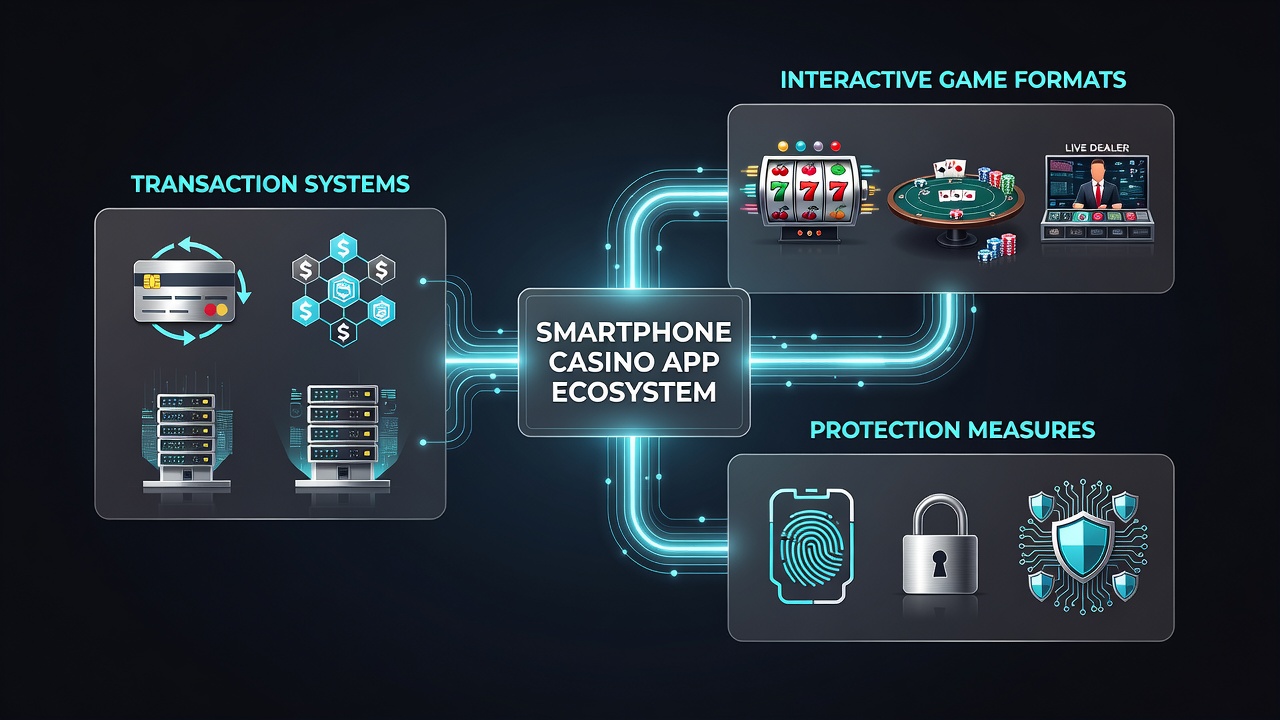
Smartphone-based casino applications link transaction systems directly to interactive game formats through layered protection measures that handle data movement and user verification in real time. These connections appear in the way payment gateways process deposits and withdrawals while game engines deliver slot reels, table simulations, and live dealer streams without interruption. Developers design the architecture so that each component feeds information into the others, creating a single operational flow rather than isolated parts.
Transaction Systems in Mobile Casino Environments
Transaction systems manage deposits, withdrawals, and balance updates across multiple funding channels that include digital wallets, bank transfers, and prepaid cards. Application programming interfaces connect these channels to the casino backend so that a completed deposit instantly credits the user's account and unlocks game access. Data encryption occurs at the point of entry, and tokenization replaces card details with unique identifiers that travel through secure channels. Observers note that processing speeds have improved as networks adopted faster settlement protocols, allowing many transactions to complete within seconds rather than minutes.
Interactive Game Formats and Their Data Requirements
Interactive game formats range from random-number-generator slots to real-time multiplayer tables and live-streamed dealer experiences. Each format generates continuous data streams that record bet amounts, outcome results, and session durations. Game servers must pull current balance information from the transaction layer before allowing a wager to proceed, and they push updated balances back once a round ends. This back-and-forth exchange relies on low-latency connections so that players experience no noticeable delay between placing a bet and seeing the result. Studies from industry research groups show that games with higher interaction rates place greater demands on both bandwidth and server synchronization.
Protection Measures That Span Both Areas
Protection measures include multi-factor authentication, device fingerprinting, behavioral analytics, and continuous monitoring for unusual patterns. These tools operate across transaction and gameplay layers simultaneously. When a transaction request arrives, the system checks device history and location data before releasing funds into the game balance. During play, the same monitoring tools track bet sizing and session length to flag potential irregularities. As of July 2026, several regulatory bodies updated their technical standards to require real-time anomaly detection that covers both payment and game activity in a single audit trail.
One study released by the University of Nevada's gaming research center examined how integrated monitoring reduced certain categories of disputed transactions in mobile platforms. The findings indicated that combining transaction logs with gameplay data produced clearer records than examining either set alone. Developers therefore route both data types through centralized logging services that regulators can review during compliance checks.
How the Components Interact in Practice
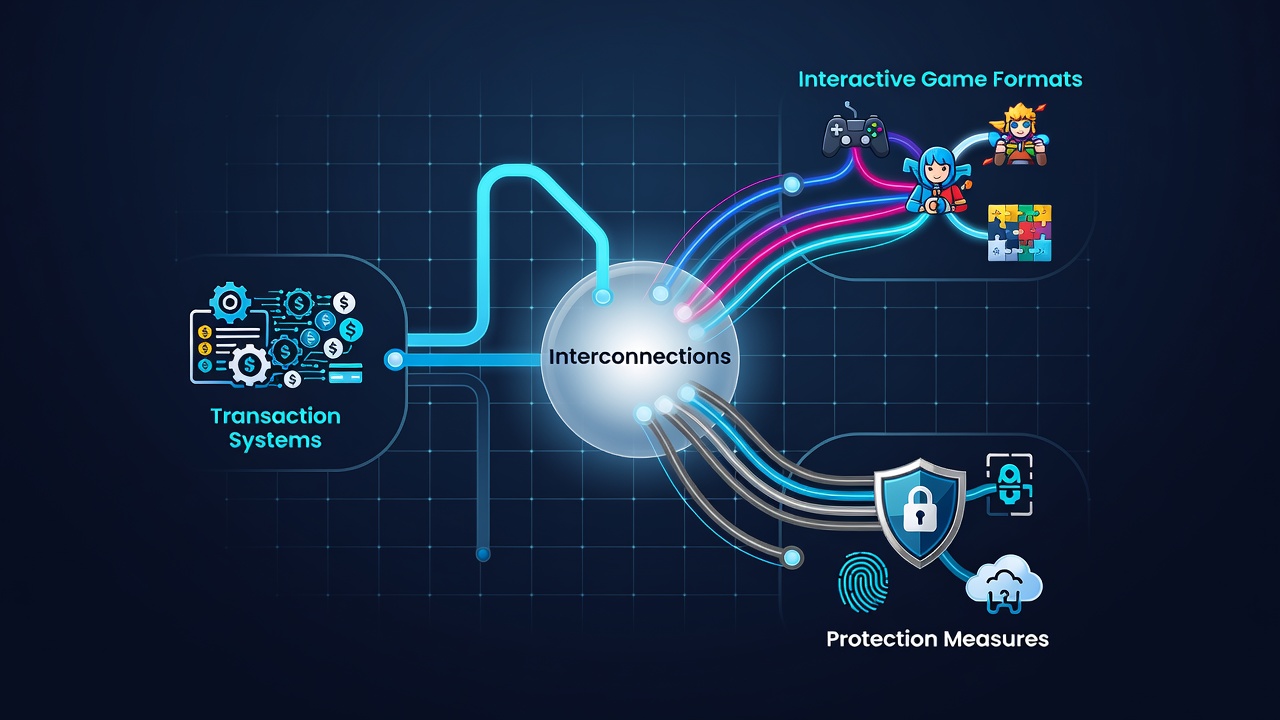
The practical interconnection shows up when a player initiates a deposit, selects a game, and begins wagering. The transaction system validates the payment and updates the balance. The game format then queries that balance before each spin or hand. Protection layers examine every step for consistency with prior behavior and device signatures. If a sudden large withdrawal request follows an unusually rapid series of high-stakes bets, the monitoring system can pause the transaction and trigger additional verification. This coordinated response prevents the components from operating in isolation and reduces the window for unauthorized activity.
Regulatory filings from the New Jersey Division of Gaming Enforcement document how operators must maintain separate yet linked audit trails for financial and game events. These requirements ensure that investigators can reconstruct an entire session from initial deposit through final cashout without gaps in the record. Operators meet the standard by embedding unique session identifiers that travel with both transaction and game data packets.
Technical Standards and Data Flow
Technical standards developed by industry associations specify how application interfaces should handle encryption keys, session timeouts, and error recovery. When a network interruption occurs mid-game, the system must preserve the last verified balance and resume without creating duplicate transactions. Protection protocols require that any resumed session re-authenticates the device and confirms the balance before play continues. Data flow diagrams published by research institutions illustrate these handoffs as a continuous loop rather than a linear sequence, with checkpoints at each transfer point.
Figures from a 2025 industry report compiled by the American Gaming Association revealed that mobile casino applications processed an increasing share of total wagers through integrated payment and game modules. The same report noted that operators allocating resources to unified security platforms experienced fewer service interruptions during peak usage periods. These outcomes stem from the way transaction verification and game state management share the same monitoring infrastructure.
Conclusion
The interconnections among transaction systems, interactive game formats, and protection measures create a unified operational environment in smartphone-based casino applications. Each element supplies data that the others require, while protection layers oversee the entire exchange. Regulatory updates through July 2026 continue to emphasize integrated logging and real-time detection across both financial and gameplay domains. Operators that maintain synchronized systems meet compliance obligations and sustain uninterrupted service for users.